

Fire Extinguisher Maintenance
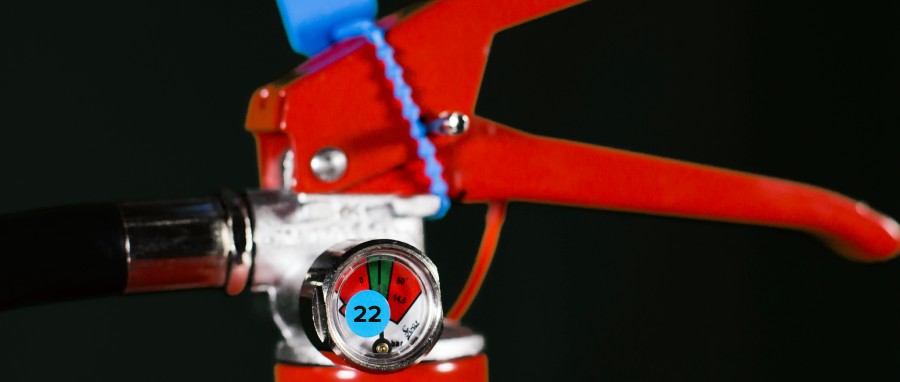
Red Box Fire Control offer a Professional Fire Extinguisher Maintenance Service by qualified engineers
We offer three main maintenance services that are tailored for your business needs:
Routine Preventive Maintenance under a simple Annual Service Agreement
One-off visit to rectify problems or bring site equipment up to standard
Five Year Fixed Price Service agreement for clients with 10 or more extinguishers



Your fire extinguishers need to be inspected and serviced annually by a competent person, this is a vital part of your fire extinguisher cover which is required by the Regulatory Reform (Fire safety) Order 2005.
Without proper maintenance, your fire extinguishers may not work properly in an emergency situation. Our maintenance services include a visual inspection, checking for blockages, weighing of the extinguisher, testing for leakages, and recharging or replacing previously used extinguishers.
Choose Red Box Fire Control for reliable fire-extinguisher maintenance to ensure your equipment is ready to use in an emergency. Our inspections come with a certificate that logs the location of each extinguisher and the due dates for extended maintenance.
To book your Fire Extinguisher Maintenance, call our friendly team on 0808 168 7000 or fill out the form and we'll get straight back in touch.
FAQs
How Long Does Fire Extinguisher Servicing/Maintenance Take?
That’s a good question, and the answer is not as simple as it might seem!
Once our technician is checked in, they’ll make a quick assessment to learn if anything has changed since the last visit. For a new site they’ll acquaint themselves with the site and activities, find out if any induction or permissions are needed, and note any hazards in the working area.
Once they get started, you can expect them to service around 10 extinguishers per hour.
If the extinguishers are in pairs and no remedial works are needed, they’ll get through them faster. If they are scattered around the site, are in access-controlled areas or remedial works are needed, it takes a lot longer.
At the end they will talk through any findings with you, agree any further action needed, and complete the job on their hand-held device.
As an example, if you have 8 extinguishers in a low-risk environment placed around your office and warehouse, the Technician will be on site for about an hour.
You can be assured that they won’t cut corners to get the job done quicker or propose unnecessary remedial works.
How Much Does Fire Extinguisher Servicing Cost?
The service cost includes the attendance charge based on the distance from Red Box Fire Control, and this also covers any congestion and parking charges.
Each extinguisher inspected costs just under £3 per unit, and the service consumables £4 per extinguisher – all plus VAT.
Here are the factors that make up the cost of an extinguisher service visit: -
- The attendance. If you're local to use, ask about our reduced attendance rate.
- The extinguisher inspection and data recording. We service in accordance with BS 5306-3 and our technicians are BAFE accredited, so they do things properly - no corner cutting.
- Serviceable components. Each extinguisher requires certain parts to be replaced at every annual service.
- Remedial works. For example, periodic replacement in line with the British Standard. Your technician will explain if any corrective action is due.
- Disposal and incineration costs. We use a fully licenced and audited waste disposal pathway for redundant extinguishers.
As an example, if you have 6 extinguishers and they require only the Basic Service, you’ll pay around £77 + VAT.
In addition, for clients with over 10 extinguishers, we offer the option of a fixed price 5-year contract which covers all planned maintenance during the 5-year period. Please ask if you’d like more information.
Do All Fire Extinguishers Need Servicing Every Year?
Yes. It is the duty of the responsible person to ensure that extinguishers are maintained regularly (minimum of an annual service for businesses) by a competent person. Portable fire extinguishers are regarded as “life safety equipment” and a planned system of maintenance is intended to ensure that the equipment is: -
- Safe
- in working order
- in good repair
- fit for purpose (suitable for hazards in the vicinity)
Can Red Box Service All Extinguishers Across Multiple Sites?
Yes, we have many clients with multiple sites, either manged under one account or separate cost centres. Our state-of-the-art service management software can cater for various scenarios and provide costs for upcoming service visits if required.
What Happens During a Fire Extinguisher Service?
For stored pressure extinguishers with a pressure gauge the following are completed during each service visit: -
- Check the safety pin is present and securely fitted.
- Examine the extinguisher body externally for damage/corrosion.
- Check the service label is present and check when last service was completed and which service is required.
- Weigh the extinguisher to determine the overall weight.
- Examine the external condition of the headcap.
- Examine the operating and servicing instructions for legibility.
- For Powders only - invert the extinguisher and listen for movement of the powder.
- Check the function of the pressure gauge and affix a year dot.
- Remove safety pin and tag.
- Check under operating lever (handle) for obstructions or damage and clean this area.
- Replace the pin and fit a new seal.
- Remove discharge hose.
- Check the bore hole is clear.
- Check the male and female threads are in good order.
- Replace the O rings on the hose/lance
- Check the discharge path is clear through the hose/noxxle.
- Check the condition of the hose and crimps.
- Refit the hose/nozzle and stow in the bracket or socket.
- Wipe the extinguisher down with a cloth.
- Record the service details on the label.
- Check the condition of the wall bracket or stand.
- Replace the extinguisher to its position.
For CO2 Extinguishers:
- Check safety pin is present and securely fitted.
- Thoroughly examine the extinguisher body for damage and corrosion.
- Check the distributor horn is present and shows no sign of damage or deterioration.
- Check the date of the manufacture/last pressure test stamped onto the body of the extinguisher.
- Check the service label is present and establish when it was last serviced and which service type is required.
- Invert the extinguisher to check the base externally for any damage or corrosion.
- Examine the operating and servicing instructions for legibility.
- Examine external condition of the headcap.
- Check vent holes in bursting disc plug are clear unless fitted with a dust cap.
- Remove safety pin (the horn must remain attached at this point)
- Check under the operating lever (handle) for obstructions or damage and clean the area.
- Replace safety pin and fit a new seal.
- Check the "grub screw" if fitted on the horn.
- Remove the horn/hose assembly (pin and seal must be in place).
- Replace the O ring on the horn.
- Check the bore hole valve is clear.
- Check the male and female threads.
- Check the discharge path through the hose/horn is clear.
- Thoroughly check external condition of the hose/horn assembly.
- Weigh the extinguisher against the tare weight stamped into the body (horn must still be off at this point).
- Refit the hose/horn assembly ensuring the O ring is in place.
- Tighten the lock nut and grub screw if one is fitted.
- Check the horn can be moved between horizontal and vertical and hold its own position.
- Stow the horn in the correct position.
- Wipe the extinguisher with a cloth.
- Record the service details on the service label.
- Check the condition of the wall bracket or stand.
- Return the extinguisher to its position.
Finally, for all extinguisher types, the technician will consider if the extinguisher type is suitable for the risks in the area, and record and report any findings.
Is Annual Fire Extinguisher Servicing a Legal Requirement?
It is a legal requirement for all non-domestic/commercial properties to equip the building (where appropriate) with suitable fire-fighting equipment (e.g. portable fire extinguishers). It is also part of these requirements to ensure they are maintained appropriately, ready to use in the event of a fire.
Who is Qualified to Service Fire Extinguishers?
Fire extinguishers can only be maintained by a competent person. The competent person has the qualifications, training and experience, with access to the relevant tools, equipment and information, manuals and knowledge of any special procedures recommended by the manufacturer of an extinguisher, to carry out the relevant maintenance procedures.
Can You Service Extinguishers from Another Supplier?
Yes, all manufacturers and suppliers should provide fire extinguishers made to BSEN3 standards, so they can be serviced under BS5306 requirements.
Do We Need to Close the Workplace During Servicing?
No, the sure extinguisher service can be completed while the business operates as usual.
What Happens if an Extinguisher Fails its Service?
When an extinguisher fails its service it leads to a few options for the technician.
- If it fails and is under 5-years old and has been maintained annually it is simply replaced under the 5-year warranty.
- If it has been damaged (dropped and dented, broken handles, scratched or gouged etc) then it is brought to the client's attention, the failed extinguisher service is stopped, the unit is maarked as Failed and labelled as corrective action required (CAR) or marked as condemned. In some cases, the client will require a quote for remedial works as a PO number is required. This may result in a return to the site to bring the fire cover back to the required level.
- Any extinguishers marked as CAR are left on site until remedial repairs can be completed. Any items marked as condemned are made safe and removed from their position on site as they may pose a health & safety risk. The site contact is advised in person and in the written report that a suitable replacement should be installed as soon as possible.
- If the client is happy to replace the failed extinguisher on the day, they can be replaced during the service visit to avoid another attendance charge.
