Fire Extinguisher Types and When to Use Them
9th Apr 2026
Updated April 2026
Ensuring that you have the right fire extinguishers installed in your commercial premises is an important part of creating a safe working environment.
Of course it’s vital to comply with Fire Safety Legislation. However having the correct equipment installed will also give you peace of mind from knowing that you have minimised the risk of harm to staff and property caused by incorrect extinguisher selection.
What types of Fire Extinguisher are there?
There are 5 main types of fire extinguishers – Water, Foam (Usually “Foamspray”), Co2, Dry powder and Wet Chemical.
Even though the fire extinguishers are classified into five main types, there are different versions of the dry powder and water extinguishers which means a total of eight different types of fire extinguishers to choose from.
- Water
- Foam
- CO2
- Dry Powder - ABC
- Wet Chemical
- Dry Powder - Specialist
- Lithium-ion
It is important for you to ensure that the right types and fire ratings of fire extinguisher are available at your business premises to meet the fire safety regulations.
There is no single type of fire extinguisher which is suitable for all classes of fire, so many premises have more than one type.
Additionally there are other fire extinguishing products, such as fire blankets and the rudimentary fire bucket.
Classes of Fire
Fires types are defined by the fuel source and are broken down into 5 different classes:
Class A – Combustible materials such as wood, paper and fabric.
Class B – Flammable liquids such as petrol and paint.
Class C – Flammable gases such as methane and propane.
Class D – Flammable metals, such as magnesium, potassium, and lithium.
Class F – Cooking oils and fats.
Class L - Specifically for lithium-ion battery fires. (e.g. from EV's, e-bikes, and power banks)
Extinguishers to be used near electrical equipment should have passed a conductivity test.
Below is a quick guide to understanding when you should use each fire extinguisher.
Remember that fire extinguishers and safety equipment generally form a big part of any fire risk assessment. Click here to discover what else a professional Fire Risk Assessment procedure involves.
Contact us about Fire Extinguisher Hire
Types of Fire Extinguishers
Water Extinguishers
Colour Bar: Red
Suitable for: Class A Fires. Most premises will require either water or foam extinguishers
Water fire extinguishers are suitable for class A fires only.
How water fire extinguishers work: The water has a cooling effect on the fire’s fuel and reduces the temperature until combustion can no longer be supported.
Not suitable for: electrical fires, flammable liquid or gas fires, although there are now types that are suitable for incidental electrical risk –check the label.
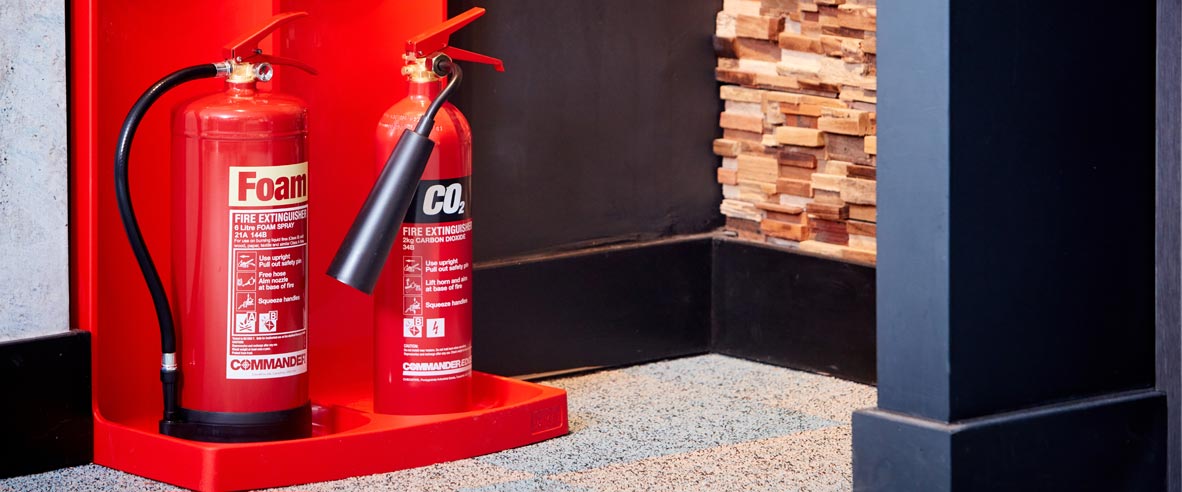
Foamspray Extinguishers
Colour Bar: Cream
Suitable for: Class A and Class B
Foam extinguishers are suitable or both class A and class B fires, and may be suitable for incidental electrical risks.
How foamspray extinguishers work: The foaming agent creates a barrier between the flame and the fuel on burning liquids, thereby extinguishing the fire.
Not suitable for: Gas, electrical risks or deep fat fires, although many modern types are safe with incidental electrical risks – check the label.
Carbon Dioxide Extinguishers
Colour Bar: Black
Suitable for: Class B, electrical.
These extinguishers work on Class B Fires, as well as electrical fires.
How Carbon dioxide fire extinguishers work: Carbon dioxide fire extinguishers suffocate the fire by displacing oxygen.
Since CO2 extinguishers don’t remove heat, care should be taken to ensure that the fire does not re-ignite - ensure to maintain travel distance. It is advised not use a CO2 fire extinguisher in a confined space, as it displaces oxygen and could lead to asphyxiation.
Not suitable for: deep fat fires, gas fires, enclosed spaces.
Dry Powder Extinguishers
Colour Bar: Blue
Suitable for: Class A / Class B / electrical risks
Dry powder extinguishers are are multipurpose, but are usually used on flammable liquid fires because of their high fire ratings. Although the high rating means they achieve good class A ratings, this should be weighed against the mess they make, potential damage to electrical equipment, and extensive clean up.
How dry powder fire extinguishers work: Dry powder fire extinguishers do not remove heat from the fire, they interrupt the combustion process. They may also encrust the fuel and starve it of oxygen.
Not suitable for: deep fat fires, gas fires
Wet Chemical Fire Extinguishers
Colour Bar: Yellow
Suitable for: Class A / Class F
Wet Chemical Extinguishers are specially developed for fires involving cooking oil and animal fat (Class F).
How Wet Chemical Fire Extinguishers work: They create a physical barrier between fuel and oxygen.
Not suitable for: gas fires. Many models are now safe on incidental electrical equipment risks.
Lithium-ion Extinguishers
Suitable for: Class L
Lithium-ion Extinguishers such as the CommanderEDGE LFX Lithium-ion battery fire extinguishers have been developed to tackle lithium-ion battery fires from electric vehicles, power banks, etc.
How Lithium-ion extinguishers work: They use a water-based agent that discharges as an endothermic foam - it breaks down the chain reaction in thermal runaway and cools the temperature of the batteries, absorbing significantly more heat than water alone.
Not suitable for: Class B, Class C or Class F fires.
____________
Fire extinguishers are always being improved as new technology is being developed. It's always best to speak to a professional who can advise on the best fire extinguisher for your requirements before you buy.
Have you seen these related articles?